In December 2024, InPlanet issued the world's first independently verified enhanced rock weathering (ERW) carbon removal credits. This year, InPlanet achieved another first: the world's first second-year issuance from that same project without reapplication. Two crediting periods, a single application of rock powder, and a growing body of evidence showing how ERW performs over time.
The webinar brought together experts working across science, verification, agronomy, and carbon markets to examine the field results from one of InPlanet’s earliest commercial ERW projects in Brazil and explain how those measurements were translated into verified carbon removals.
The panel included:
• Matthew Clarkson, PhD (Head of Carbon at InPlanet)
• Katie Earl (Senior Product Manager at Isometric)
• Mayra Maniero Rodrigues (Agronomy Specialist at InPlanet)
• Victoria Harvey (Head of CDR at ClimeFi)
• Moderator: Roos de Bruijn (Business Development Manager at InPlanet)
Below is a recap of the discussion. You can access the full webinar recording here:
https://youtu.be/xARRjpWwqwU
The project: Serra da Mantiqueira
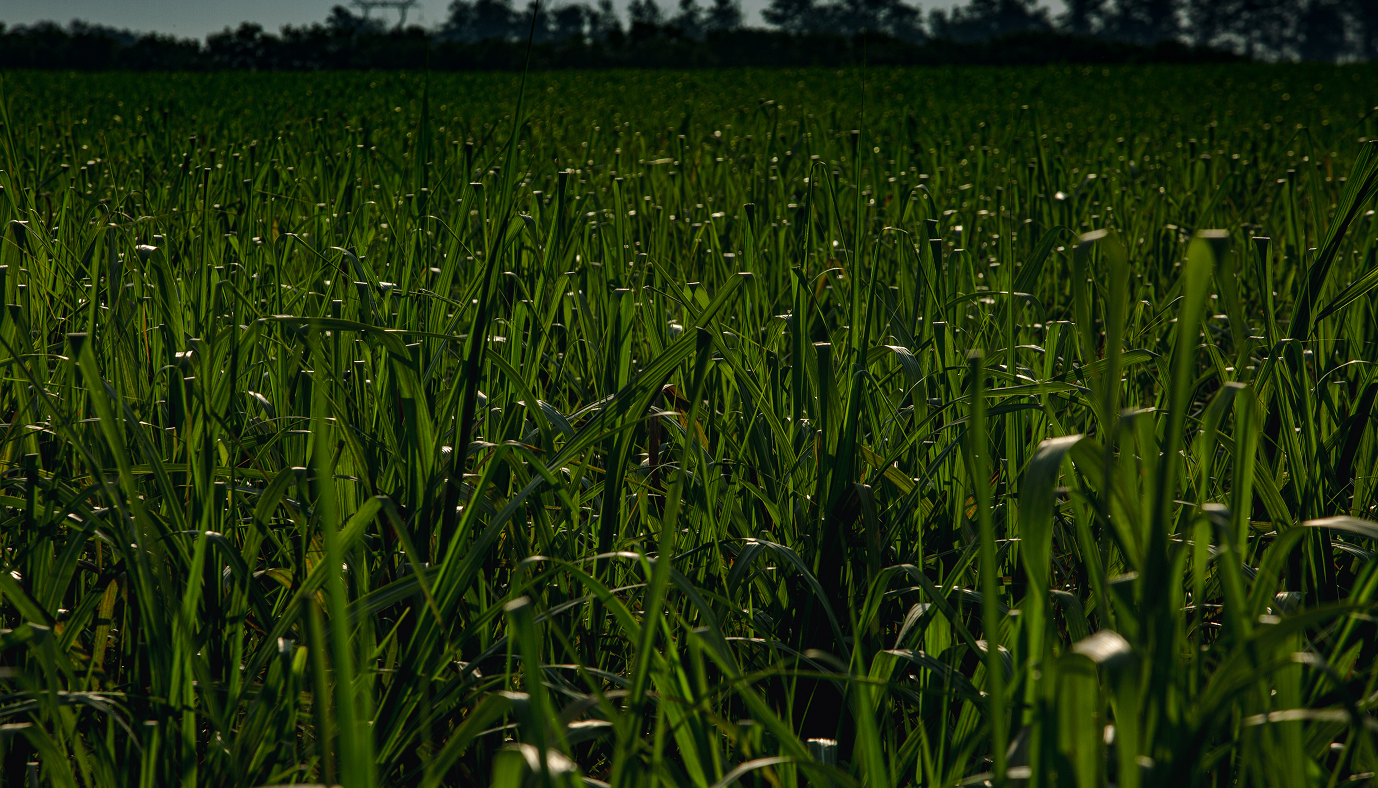
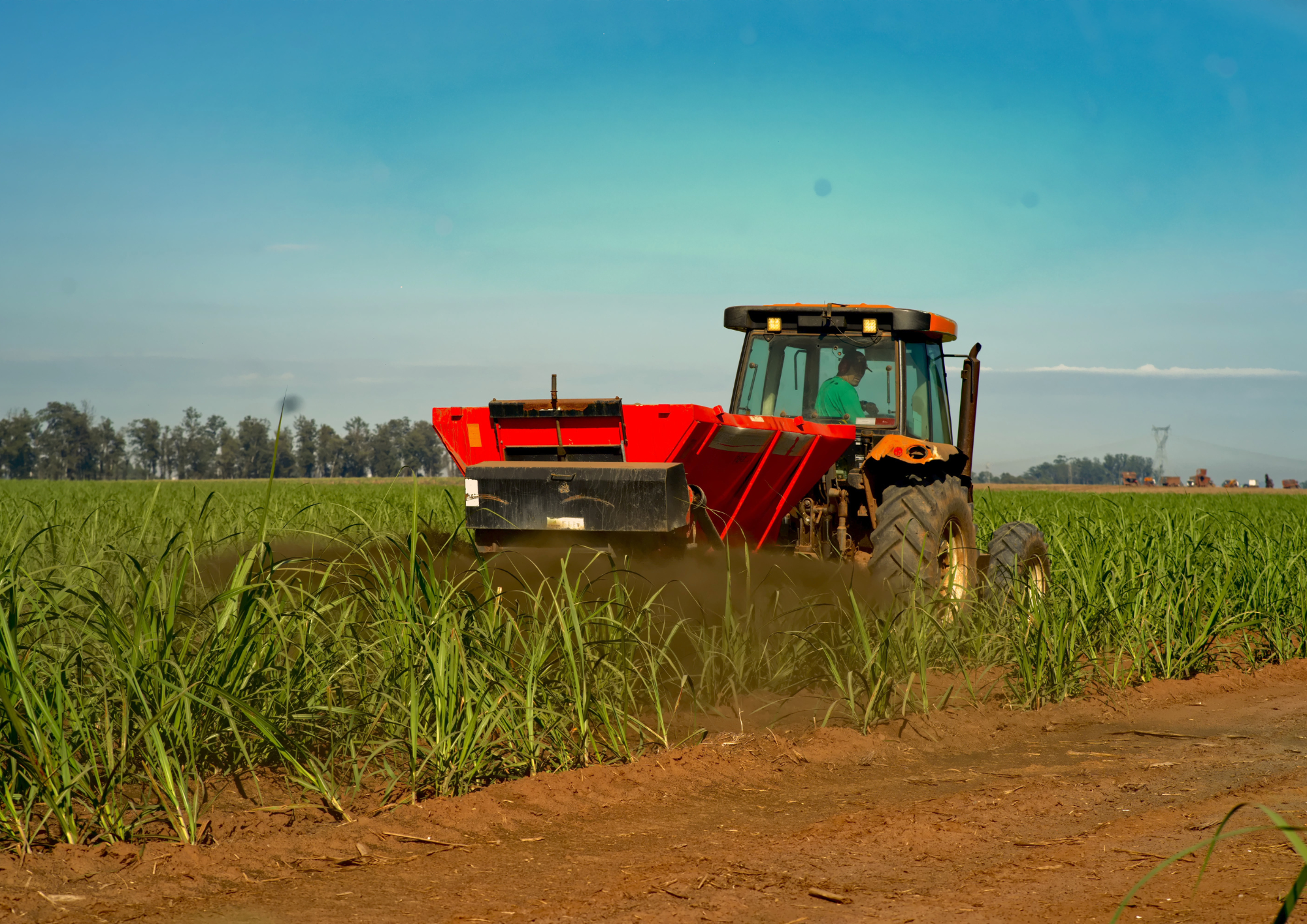
The Serra da Mantiqueira project was InPlanet’s first commercial deployment and the basis of ClimeFi’s first ERW offtake agreement. Locally sourced basalt rock powder was surface-applied across approximately 1,000 hectares at a rate of 10 tonnes per hectare. Application began in mid-2023 and was completed in September 2023.*
That single application has subsequently supported two independently verified credit issuances:
- Reporting Period 1: May 2023 – September 2024
- Reporting Period 2: September 2024 – October 2025
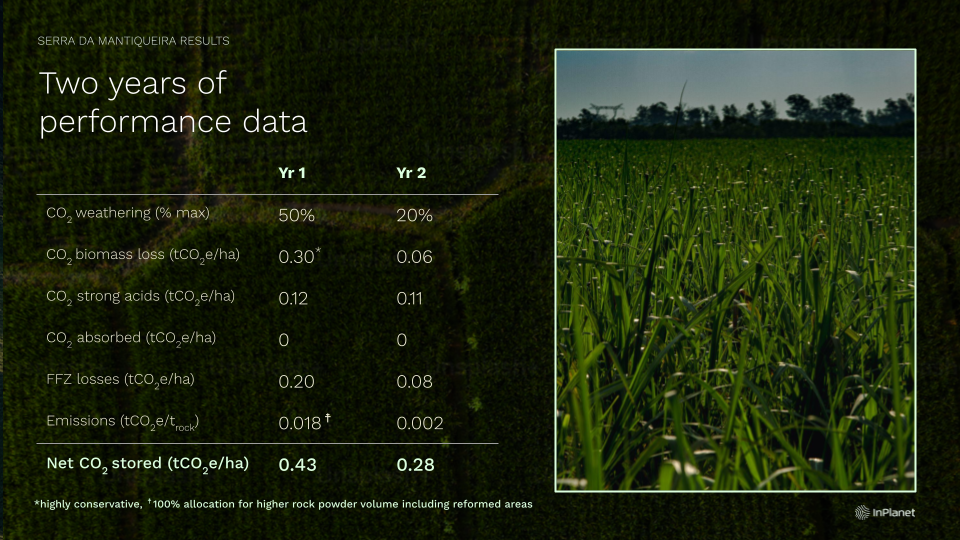
*Note: Some areas originally in scope had to be excluded from the credit claim after the land was reformed for sugarcane replanting, which made the geochemical signal unresolvable. InPlanet still accounted for all operational emissions associated with producing rock powder for those excluded areas, even though the removals themselves couldn't be claimed. The result: an issuance of 235 credits in year one, based on a claimed removal area of 540 hectares.
.png)
Simplifying MRV: The Total Cation Accounting Approach
At its core, MRV for ERW answers a simple question: How can we demonstrate that the rock is weathering and quantify the resulting CO₂ removal?
InPlanet’s primary method for answering this is the Total Cation Accounting Approach. When volcanic rock powder (such as basalt) is applied to farmland, it reacts with water and CO2 in the soil. As the rock dissolves, it releases specific nutrients, mainly calcium and magnesium ions, known as cations, into the soil system.
By directly measuring the concentration of these cations in the soil over time and comparing those numbers against a "control" area (where no rock powder was applied), we can calculate exactly how much rock has dissolved. Because the chemical reaction between the rock and CO2 is well-understood, tracking these missing cations can give us an indirect measure of much carbon dioxide has been successfully removed from the atmosphere.
Our Methodological Evolution: Moving from ITE to Total Cations
Innovation in climate science is iterative, and the project has evolved over time. Between Year 1 and Year 2 of this project, InPlanet transitioned its quantification method:
- Year 1 (ITE Approach with lower sampling density): InPlanet originally utilized an Immobile Trace Element (ITE) approach. This method tracked a rare trace element (neodymium) already present in the rock to act as a geochemical fingerprint, helping us back-calculate dissolution rates and rock powder application rate. This was carried out at a sampling denisty of approximately 1 sample/ha (see Sampling Blog Post for more details)
- Year 2 (Total Cation Approach with higher sampling density): When returning to the fields in the second year, InPlanet significantly increased their soil sampling density by 10x (moving to one sample per every two hectares). This shift provided greater statistical power and gave us greater confidence in carbon removal quantification.
For anyone wishing to learn more about the data behind this transition, we recommend watching the full webinar. The technical breakdown of this methodological shift is covered in detail starting at the 11-minute mark [11:00].
Cross-checking with pore waters
Beyond soil sampling, InPlanet validated its soil results using lysimeters and Rhizon samplers to extract pore waters directly from the field. The analysis measured calcium, magnesium, dissolved inorganic carbon (DIC), and total alkalinity. Differences in fluxes between the control and treatment areas provided clear evidence of calcium and magnesium leaving the system, together with a corresponding bicarbonate signal. This provides direct, independent evidence of carbon removal occurring at the pore-water level.
Measurement precision also improved materially between the two monitoring years. In 2023, InPlanet conducted alkalinity analysis manually, and had poor sample recovery and low frequency analyses due to the large volumes of water required. By 2024, the company had acquired its own DIC analyzer and autotitrators, improving both the accuracy and frequency of the measurements used.
Matthew summarized the key takeaway: the results were broadly consistent across both years, while precision improved with the greater sampling densityand better-calibrated estimates of biomass losses.
Importantly, these results were generated from a single rock-spreading event conducted in 2023. Although part of the treated area was subsequently replanted, meaning that only 540 hectares remained available for monitoring, the calculations conservatively accounted for all operational emissions associated with spreading across the entire original treatment area, including the replanted fields.
Beyond carbon: the agronomic co-benefits
While the geochemical data proves the carbon story to buyers, the agricultural transformation is what gets farmers excited. Farming in Brazil faces challenges: naturally acidic soils and a reliance on imported fertilizers that can be subject to price volatility.
To prove how enhanced rock weathering tackles these challenges on the ground, Mayra Rodrigues (InPlanet Agronomic R&D Lead) shared data evaluated from both a dedicated field monitoring station (four application rates: 0, 10, 50, and 100 tonnes/hectare) and 540 hectares of commercial sugarcane fields.
.png)
Notably, these improvements resulted from a single application of rock powder, providing clear evidence that basalt can function as a slow-release soil amendment. The intervention addresses several critical agricultural challenges through three complementary mechanisms:
Unlocking bound nutrients: In highly weathered tropical soils, phosphorus can become strongly bound to soil minerals and therefore unavailable to crops. Basalt’s silicon content can compete for some of these binding sites, helping to increase phosphorus availability and improve fertilizer-use efficiency.
Providing a slow-release nutrient source: Unlike highly soluble synthetic inputs, which can leach rapidly under heavy rainfall, basalt dissolves gradually. This provides a sustained, multi-season supply of calcium, magnesium, potassium, and other nutrients.
Carbon finance makes it possible to fund the application rates required to deliver these benefits. The application rates used (10-20 tonnes per ha of basalt) would otherwise be prohibitively expensive for most growers. As a result, farmers receive subsidized improvements in soil health and productivity.. The farm manager, Luiz Murbach, has already reported increased plant vigor and is using the findings to refine nutrient management across the farm.
The partnership therefore reduces upfront input costs while strengthening long-term agricultural and climate resilience. The results have been sufficiently compelling that InPlanet is now reapplying rock powder to the original fields and expanding the intervention into new areas of the same farm.
How Isometric's Certify platform changed verification
The first verification in 2024 required exchanging hundreds of documents and Jupyter notebooks between InPlanet and Isometric. The second verification looked entirely different, streamlined by Isometric's Certify platform through four key upgrades:
- Structured Data Templates: Clear guidelines connect sample data, measurement locations, and assets automatically.
- Traceable "Code Calculations": Verifiers can easily trace the full quantification and bootstrapping methodologies from raw inputs to final outputs.
- Automated Data Checks: Flagging missing sources or verifying control areas occurs before a human auditor ever sees the data.
- Centralized Issue Tracking: Scattered spreadsheets are replaced with a single, shared source of truth for open questions.
As ERW scales, Isometric plans to keep evolving the platform, incorporating new measurement techniques, introducing model-based quantification, and moving toward an annual site-visit cadence to keep verification fast and scalable.
The buyer's perspective: building a track record
ClimeFi, which received these second-year credits, framed the milestone in market terms. With durable carbon removal delivering meaningful volumes for only a matter of months, a consecutive issuance establishes a crucial track record for both InPlanet and the broader ERW pathway.
To protect buyers, ClimeFi’s due diligence evaluates three core pillars:
- Integrity: Ensuring absolute carbon durability, rigorous accounting, and positive community impact.
- Delivery Risk: Assessing technology, value chain, financial, and certification risks.
- Opportunity: Evaluating scalability and agronomic co-benefits, which are now central to buyer decision-making.
This structure aligns with a broader market shift: buyers are maturing quickly, moving from basic questions to securing long-term delivery feasibility. Through its "Beyond 2030" initiative, ClimeFi is already helping corporate buyers build portfolios stretching into the late 2030s, heavily prioritizing suppliers with a proven delivery track record today.
What's next for ERW MRV at scale
As Enhanced Rock Weathering grows, the science and verification infrastructure behind it are maturing rapidly. The panel closed with a look at the next phase of scale:
- Smarter Verification: To reduce costs and speed up verification, registry partners like Isometric are shifting toward automated protocol checks, annual spot-check site visits, and smart sampling models that extrapolate data from high-density zones across broader areas.
- Predictive AI: With InPlanet’s data pool increasing tenfold each year across nine different geographies, they are building a foundation to move toward machine-learning-assisted models capable of predicting weathering rates within just a few more seasons.
- Targeted Ecological Impact: Data shows that the highest weathering efficiencies are happening in the sandiest, most degraded soils. This means carbon finance is landing precisely where soil restoration is needed most.
Two years, one single application of rock powder, and two independently verified issuances later, the data tells a consistent story. Enhanced rock weathering in Brazil is measurable, durable, and ready for investment. The science is keeping pace with the market, proving that tropical agriculture is one of our greatest allies in the fight against climate change.
Latest Posts
InPlanet and Idemitsu Americas Holdings Close Non-Recourse Debt Facility, Setting a New Standard for Financing ERW Carbon Removal
The transaction secures capital against contracted, insured delivery of durable removals, proof that high-integrity projects can now access scalable debt beyond equity.

InPlanet selected as the Brazilian supplier in Whirlpool Corporation's durable carbon removal portfolio
Structured by ClimeFi, the agreement pairs a firm 2030 delivery with standalone options, expanding Enhanced Rock Weathering across Brazil's agricultural heartland.